
A Google Penalty: We Know How to Bring You Back to Life
You recognize it immediately. A sudden drop in organic traffic, a plunge in rankings for critical keywords. This isn’t just another small algorithm change – it’s a fact on the ground: your site has received a Google penalty. It can be a frightening experience, but for us, it’s simply a problem we solve.
That’s exactly why we’re here. We provide you with peace of mind and professional knowledge, and we’re going to explain exactly how we work. This guide is our action plan for bringing your site back to where it belongs.
Two types of penalties: let’s understand what happened
The first step is always diagnosis. We distinguish between two types of penalties, and each requires precise treatment.
An algorithmic penalty
Google doesn’t send you a notification about this kind of penalty. We identify it through thorough traffic analysis, which reveals a sharp drop occurring when Google releases a core update. An algorithmic penalty comes when the content, structure or user experience on your site no longer meets Google’s current standards.
A manual penalty
This is a penalty that a human reviewer on Google’s behalf has imposed directly on your site. In this case, you always receive an explicit notification in the “Manual actions” report in Google Search Console. We understand the message immediately and follow the appropriate protocol. A manual penalty comes as a result of a blatant violation of Google’s guidelines.
18 reasons for Google penalties: how we avoid and handle them
We know it’s hard to avoid a penalty if you don’t understand what causes it. So we’ve gathered for you the 18 most common reasons for Google penalties, and you’ll understand how we handle each of them.
Category 1: dubious links – the most dangerous SEO landmine
- Buying/selling links: You pay or get paid for a link. Google sees this as a clear attempt to manipulate rankings. We simply don’t play this game.
- Private blog networks (PBNs): You set up or join a network of sites whose only purpose is to pump out links. It’s a tactic we completely reject.
- Excessive link exchanges: You exchange links in large quantities and with irrelevant sites. It isn’t natural, and Google detects it.
- Spam links in comments/forums: You post automated or irrelevant links in blog comments or forums. We work clean.
- Unnaturally distributed links: Many links from irrelevant sites, or links with identical anchor text. Google detects unnatural patterns.
- Using automated link-building tools: You use software to create thousands of links quickly. It’s a sure way to get penalized.
Category 2: problematic content – quantity doesn’t replace quality
- Thin/superficial content: When there are pages with little text that don’t provide real value to the user. We create content that offers a solution.
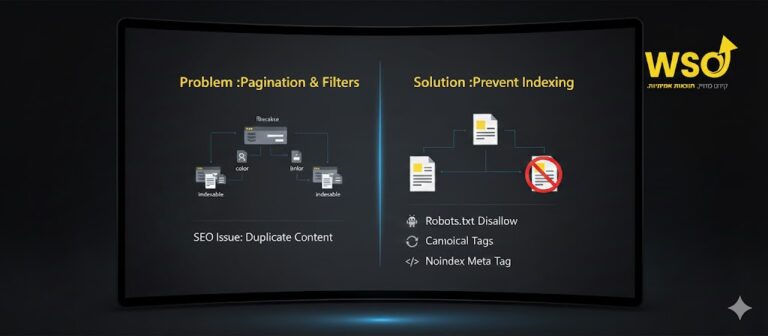
- Duplicate content: You copy content from other sites or publish the same content on several pages of your site. Google demands originality.
- Automatically generated content (unedited AI content): You use AI tools to produce content in bulk, without deep human editing and added value. Google detects the lack of quality.
- Keyword stuffing: You repeat the same keyword in an excessive, unnatural way. It only hurts user experience and rankings.
- Irrelevant content: Pages that display content that doesn’t match the user’s search intent.
Group 3: “black hat” and forbidden tactics – attempts to cheat the system
- Cloaking: You show visitors different content from what you show Google’s bots. This is a serious violation and leads to a manual penalty.
- Hidden text/links: You hide text or links (for example, white on a white background) to fool Google.
- Sneaky redirects: You redirect users to a page different from the one Google indexed, usually without their knowledge.
- User-generated spam: Spam comments on blogs, junk posts in forums, or profiles with spam links created on your site.
- Pages with especially thin content: Pages with very little text that have no real value.
- Sites with malware: A site that spreads viruses or malicious software. Google will warn users and remove the site from search.
- Sites with intrusive ads (interstitial ads): Pop-up ads that make it hard for visitors to view the content, especially on mobile.
The action plan: how we bring your site back to high rankings
We don’t believe in panic. We believe in solutions. When we identify a penalty, we activate a precise plan.
- Immediate diagnosis: We go into Google Search Console and identify the type of penalty. Within seconds, we already know what your site’s problem is.
- Building a treatment plan: We build a personalized plan to solve the problem. If the problem is links, we identify the problematic links, work to remove them and use Google’s Disavow tool to disown them. If the problem is content, we improve and rewrite thin content.
- Submitting a reconsideration request: In the case of a manual penalty, we submit a reconsideration request to Google and provide a detailed report presenting the problems we identified and the steps we took to fix them.
- Long-term rehabilitation: We don’t settle for fixing the problem. We work systematically to rebuild the site on a strong foundation, with quality content, an excellent user experience and ethical link building. We leave no room for doubt.
The key to peace of mind
The safest way to avoid a penalty is to work from the start with an agency that knows what it’s doing. We at WSO build websites and promote them on strong foundations. We don’t take risks, and we work in a way that ensures stable results over time, based on quality organic SEO that works long term, with no shortcuts.
Your site is an asset. Don’t let it be damaged because of a lack of professionalism.
If your site has been hit, we’re here to deal with it. Contact us now. We’ll provide comprehensive advice, build a precise recovery plan and bring your site back to where it belongs.