The Future of Digital Marketing: What Will We See in 2025 and How Should You Prepare?
The world of digital marketing doesn’t stop – it races forward. In 2025, existing trends will grow stronger and change the rules of the game dramatically. That’s why businesses that want to thrive must understand these trends. Prepare for them. Adapt your strategies now.
In this article, we’ll dive deep into the key trends that will shape digital marketing in the near future. We’ll also give you practical tools to prepare effectively, so you keep a clear competitive advantage.
1. Artificial intelligence (AI) and data-driven marketing: automation that works for you
Artificial intelligence is no longer science fiction. It has become a major driving force in digital marketing, and its power will only grow. We’re moving from AI that just “says things” to AI that actually “does things”. It operates through autonomous AI agents.
What will happen? AI will perform more precise audience segmentation. It will create personalized content in different versions. Moreover, AI will perform real-time ad optimization. It will analyze customer sentiment at unprecedented speed. This technology will enable hyper-personalization, based on in-depth analysis of purchase history, browsing behavior and personal preferences. In addition, AI-powered chatbots and virtual assistants will provide human-like interactions. They’ll handle complex queries, dramatically improving the customer experience. What’s more, AI tools will even help with creative testing. They’ll predict campaign success before launch, saving you valuable time and resources.
How to prepare? Develop AI skills now. Learn to use leading AI tools for content creation (like ChatGPT and Jasper). Use them for optimization (such as Surfer SEO and Semrush AI). Use them for advertising automation (like Google Performance Max). Also, define a clear AI policy in your business. It should include guidelines for using the technology correctly. Maintain rigorous quality-control procedures. Stay fully transparent with your customers. Remember, despite the power of automation, focus on the human aspect. Human oversight is essential. Make sure AI outputs are accurate, relevant, ethical and genuinely useful.
2. The evolution of SEO: beyond traditional search
The future of SEO combines AI, user-focused strategies and multi-channel optimization. Google will continue to give significant priority to E-E-A-T (Experience, Expertise, Authoritativeness and Trustworthiness). It will strengthen the importance of topical authority – the depth of your knowledge on a specific subject.
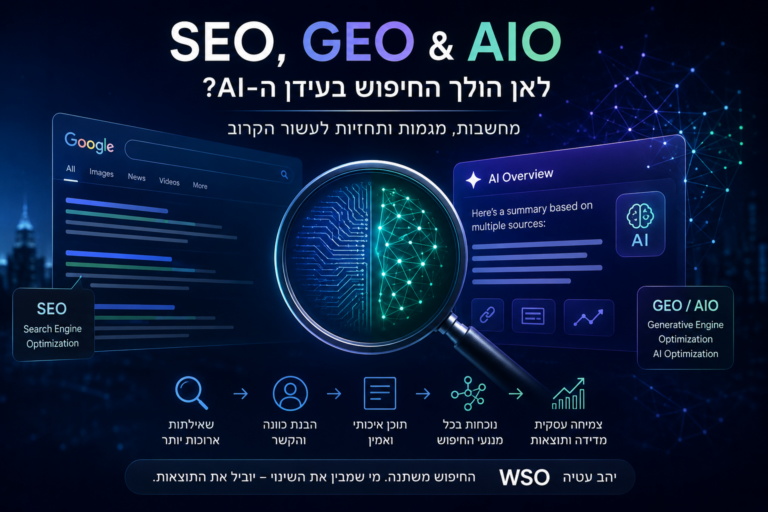
What will happen? We’ll see a significant expansion of AI Overviews (AI-based answers) directly in the search results. This will increase the phenomenon of **”zero-click searches”**, as users find what they need without visiting websites. Moreover, voice search and visual search will become more central. Users will look for precise answers to complex questions using their voice. This will require you to optimize for long-tail keywords and natural language, as if you’re having a conversation. Visual search, where customers upload images to find similar products, will require adapting the visual content on your site. In addition, Answer Engine Optimization (AEO) will be especially important with the rise of large language models (LLMs). They can serve as significant traffic sources outside Google.
How to prepare? Focus deeply on user intent. Create comprehensive content that answers detailed questions. Address specific search goals, not just individual keywords. Optimize for voice search by adapting your content to long, natural-language questions. Also, invest in E-E-A-T consistently: have content created by real experts. Build a strong reputation in your field. Make sure your site has a clear purpose and provides real value to visitors. Adapt your content to AI Overviews. Think about how your content can become part of AI-based answers in the search results. Finally, explore community-based search platforms like Reddit and Quora. They’ll become more important as sources of authentic answers and trustworthy opinions.
3. Data privacy and customer trust: building trustworthy relationships
In a world with growing privacy awareness, customer trust is becoming the most valuable currency. As a result, data privacy regulations will continue to tighten. In 2025, we’ll see further waves of new privacy laws in various countries.
What will happen? Clear, explicit consent mechanisms for data collection will be implemented. The public will demand greater transparency about how personal data is used. Third-party cookies, once a cornerstone of targeted advertising, will lose importance. This will require a shift to first-party data – information you collect directly from customers. Zero-party data will also be important. This is information consumers share voluntarily and out of trust.
How to prepare? Implement a clear, easy-to-understand privacy policy. Make sure it transparently details what information is collected, why it’s collected and how you use it. Implement explicit consent mechanisms. Get clear permission from users before collecting data, especially for targeted advertising. Focus on collecting and analyzing first-party and zero-party data. Collect information directly from customers through surveys, explicit user preferences and on-site interactions. Finally, invest significantly in information security. Strengthen your data security measures. Be ready to report any security breach immediately and transparently.
4. Influencer marketing: authenticity above all
Influencer marketing continues to grow fast. However, the focus is now shifting sharply to authenticity and purpose-driven content. Consumers are smarter. They quickly recognize insincere messages.
What will happen? We’ll see a significant rise in the use of nano- and micro-influencers. These are content creators with smaller audiences, but especially engaged and trustworthy ones. Moreover, AI integration will help accurately identify suitable influencers. It will support predicting and optimizing campaign results. In addition, B2B influencer marketing will gain significant momentum, as businesses recognize the value of experts in their field. There will be growing emphasis on long-term partnerships with influencers. Employee-driven content will also be important, as companies harness the power of employees as trustworthy brand ambassadors.
How to prepare? Choose suitable influencers carefully. Look for creators whose values match your brand. Make sure they have a truly engaged, authentic audience. Work with micro- and nano-influencers. Take advantage of the high accessibility and deep engagement they offer. Create long-term partnerships with influencers. Build stable relationships that enable consistent, credible and persuasive content. Finally, encourage employee-driven content: let your employees be brand ambassadors on social media. They’re a trustworthy, accessible source of information and insights, and they can significantly strengthen your relationship with customers.
The changes in digital marketing in 2025 require flexibility, continuous learning and, above all, a willingness to adopt new technologies. Think outside the box. Businesses that build these trends into their strategy will succeed in forming deep relationships with their customers. They’ll grow their market share and stay relevant in a rapidly changing digital landscape.
Want to make sure your business is ready for the future of digital marketing? Contact WSO today for strategic consulting that will put you at the forefront of innovation!